The Port Flour Mill on Essex Street
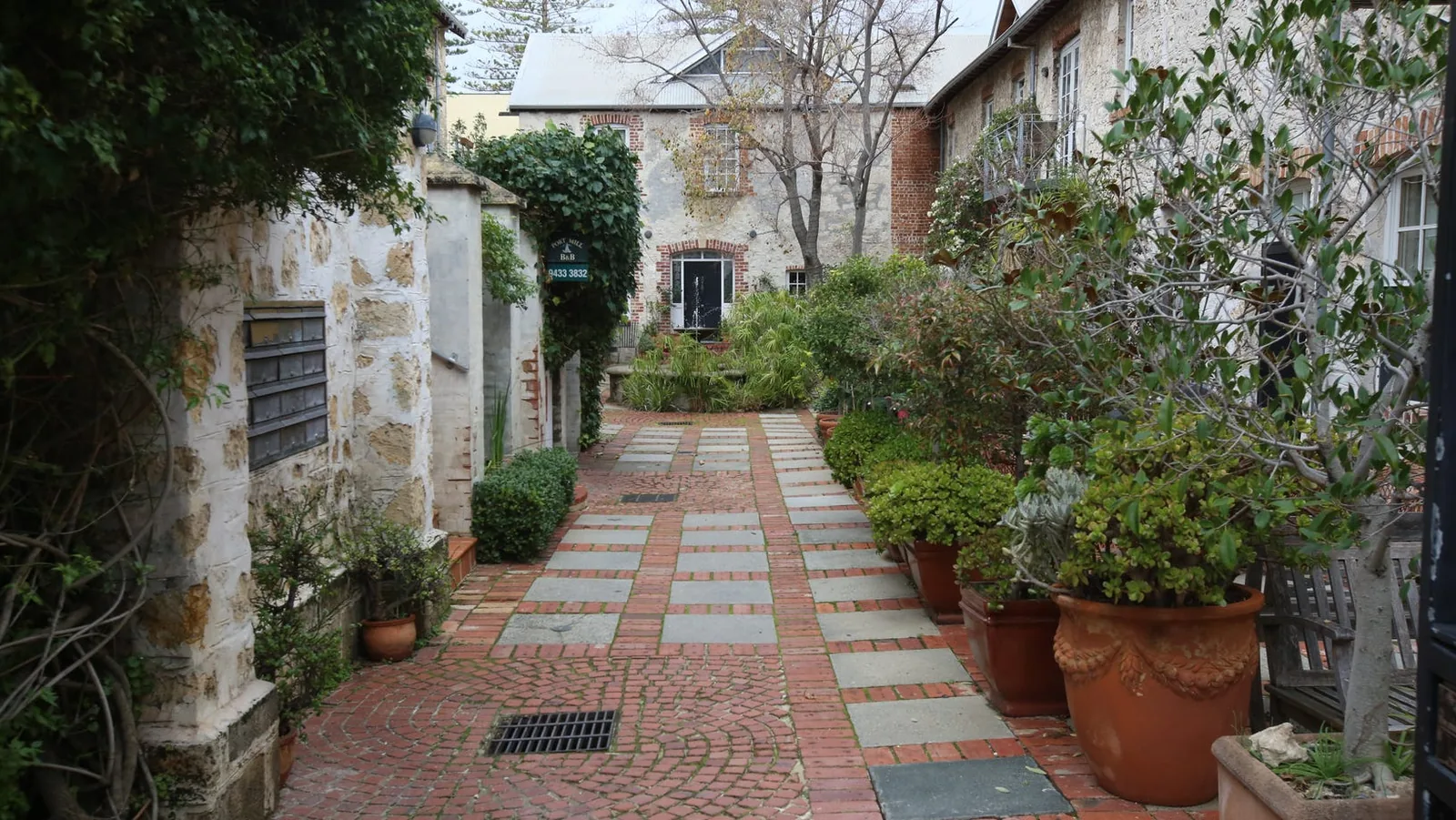
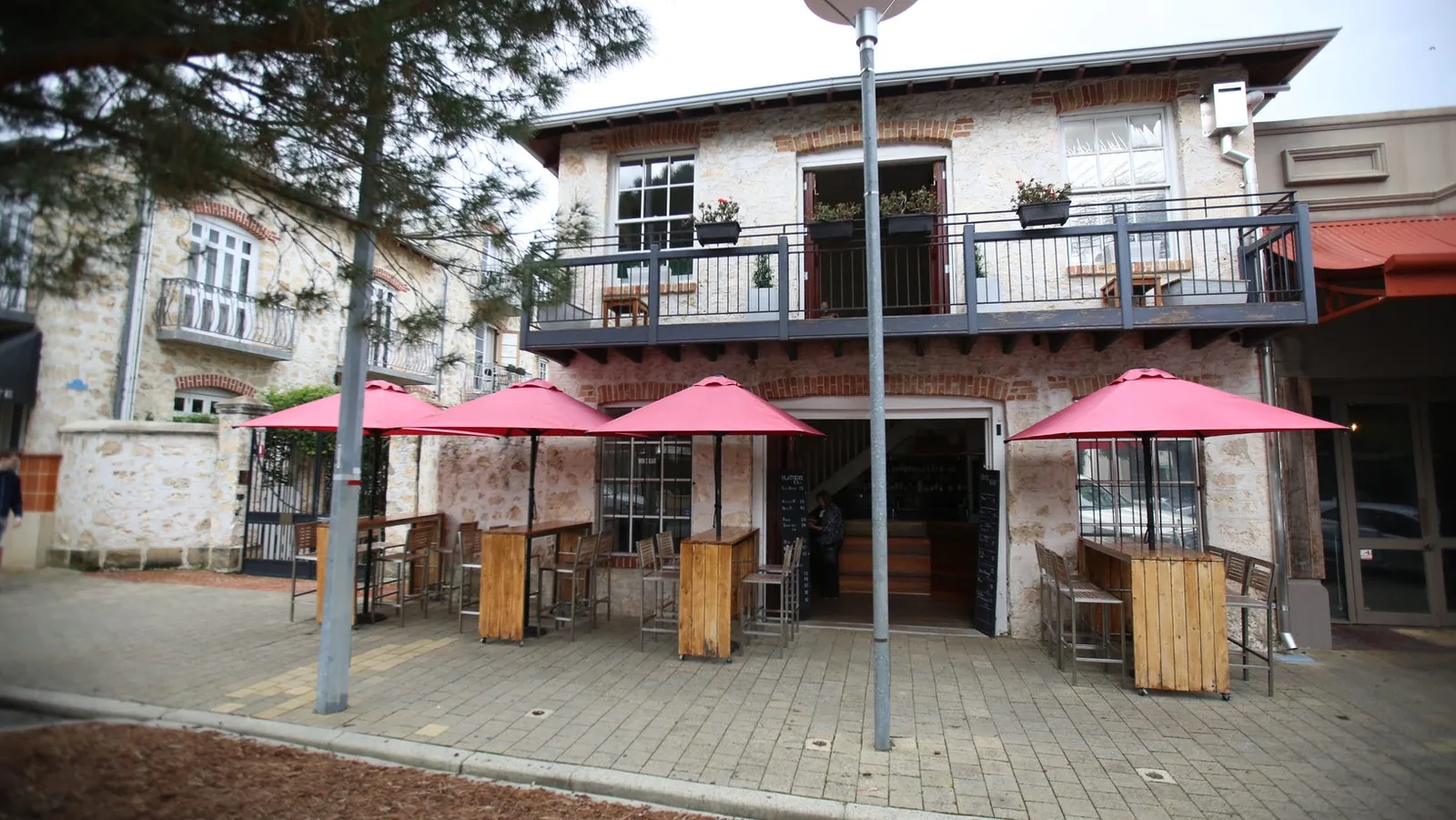
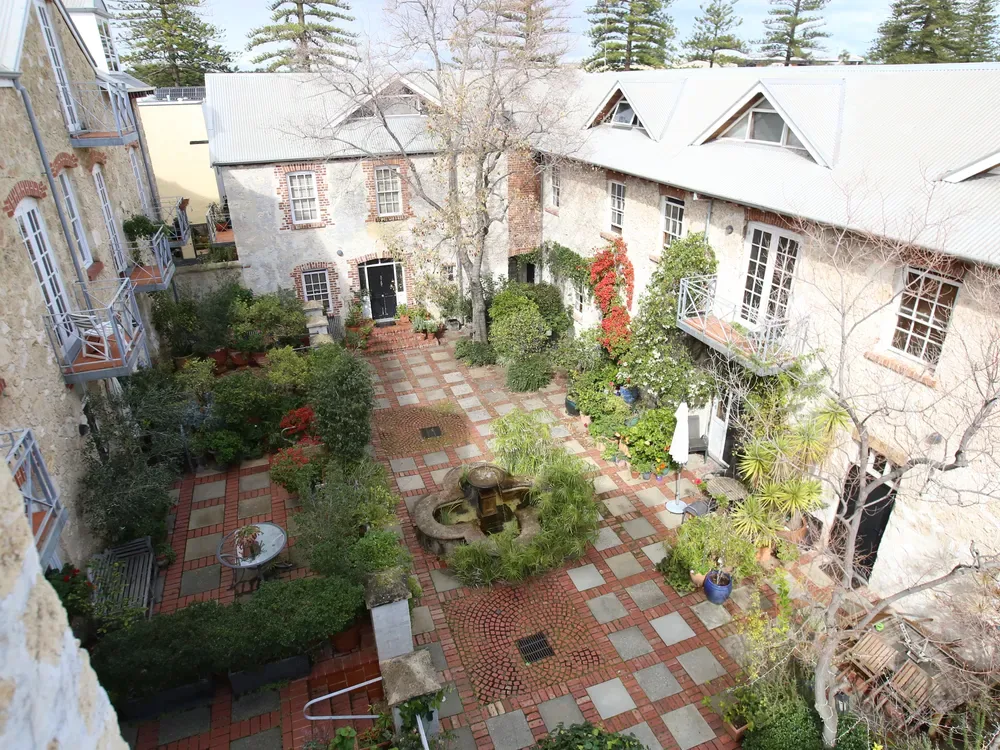
A two-storey limestone mill a block from the Fremantle Markets, built from about 1862 and still standing. It has been a flour mill, an engineering workshop and, since 1993, private homes and a small bed and breakfast. The complex is gated and residential, but you can admire it from Essex Street and peek through the cast-iron gates into its courtyard.
A mill for a growing colony
In the 1860s Fremantle was a small port with a big job. Ships from Britain and the Indian Ocean called at its anchorage. Farms inland were growing wheat, and the town’s bakers, households and ships’ stores all needed flour. Mills went up close to the waterfront and the town’s streets, where grain could arrive and flour could leave by cart.
The Port Flour Mill was one of them. The State heritage record dates its construction from about 1862: a two-storey building in Fremantle’s local limestone, with brick dressings, in the plain, well-proportioned Victorian Georgian style of the colony’s working buildings.
Millers, owners and leaseholders
The mill changed hands many times, which tells its own story about the business of milling in a colonial port:
- 1865: leased to T. & H. Carter.
- 1880s: run by a miller named Oakley. After his death in 1883 the property was offered for sale.
- To 1893: owned by Edward Higham.
- To 1907: James Gillespie was recorded as the mill owner, while Alice Pearse owned the adjoining warehouses, stables and office.
- 1907: Gillespie sold to the Westralian Union Flour Co.
From flour to engineering
Milling in Fremantle’s town centre faded as larger, modern mills took over. In 1939 the building became an engineering workshop, sold to Percy Smith, and the Smith family held it for decades. Other occupants over the years included Henry Jones (IXL jam manufacturers) and the motor trimmers and vulcanisers Foden & Bokenham. Each left the limestone walls standing and adapted the inside to the work of the day.
Saved and converted
By the 1970s the building’s value was recognised:
- 1974: classified by the National Trust.
- 1978: entered on the Register of the National Estate.
- 1993: planning approval converted the mill into seven units: six homes and one bed and breakfast, and the place was entered on the State Register of Heritage Places on 31 December 1993.
- 2000 and 2007: included in the City of Fremantle’s Municipal Inventory (Level 1A, the highest category) and its Local Heritage List.
Level 1A means the City considers the mill “of exceptional cultural heritage significance in its own right”. Any development application is referred to the Heritage Council.
Seeing the mill today
The Port Flour Mill is not a museum or attraction. It’s a private, gated residential complex of homes and a small bed and breakfast, and residents live here. You’re welcome to enjoy it from the street:
- Walk down Essex Street from South Terrace and look up at the rough-faced limestone and brick dressings.
- Look through the big cast-iron gates into the courtyard, with its paving, potted gardens, fountain and limestone walls. It’s one of Fremantle’s prettiest views, and many people stop for a photo.
- Please stay outside the gates and keep noise down. The courtyard is private property.
- Have a glass of wine at the front. Whisper Wine Bar, a small wine and cheese bar, sits at street level in the front of the complex (Shop 1, 15 Essex Street).
- Pop into the gallery opposite. Nyisztor Studio, an artist-run art gallery, is across Essex Street. Check its opening times before you go.
The name today
The bed and breakfast inside the old mill carries its name: Port Mill. Four suites are named after Dutch ships of the 1600s and 1700s from the early European charting of Australia’s coast: Leeuwin, Batavia, Duyfken and Zuytdorp. If you’d like to stay inside the mill, see Staying at Port Mill.
We’re collecting photographs and memories of the Port Flour Mill. If you have family history connected to the mill, its millers or the Essex Street workshops, we’d love to hear from you.
Essex Street then and now
Essex Street runs west from South Terrace towards the waterfront, a block from the Markets. Its limestone buildings show how close Fremantle’s working life sat to its main street: the mill, warehouses, stables and offices that served the port. Before the Fremantle Lunatic Asylum was finished in the 1860s, the convict establishment even ran a temporary asylum on Essex Street, recorded in a report held by the City of Fremantle’s Local History Collection. The permanent asylum is now the Walyalup Fremantle Arts Centre.
On the heritage walk
The mill is stop 8 on our free, self-guided Fremantle heritage walk, between Esplanade Park and the Markets. Read more about the eras around it: the convict era that taught a generation of Fremantle builders to work limestone, and the harbour that made the 1890s boom.
Questions people ask
When was the Port Flour Mill built?
Construction dates from about 1862. The State heritage record gives the place as constructed from 1862, and it was operating as a flour mill by 1865, when it was leased to T. & H. Carter.
Is the Port Flour Mill heritage listed?
Yes. It was classified by the National Trust in 1974, placed on the Register of the National Estate in 1978 and entered on the State Register of Heritage Places in 1993. The City of Fremantle rates it Level 1A, of exceptional cultural heritage significance.
Can you visit the Port Flour Mill?
Not inside. The Port Flour Mill is a private, gated residential complex of homes and a small bed and breakfast, so please don't enter. You can see its limestone walls from Essex Street and photograph the courtyard through the cast-iron gates, a short walk from the Fremantle Markets. Guests of Port Mill B&B stay inside.
Who owns the Port Flour Mill?
Since its 1993 conversion, the Port Flour Mill has been divided into private homes and a bed and breakfast, each separately owned. The building is protected on the State Register of Heritage Places.
What was the Temporary Lunatic Asylum on Essex Street?
Before the Fremantle Lunatic Asylum (now the Walyalup Fremantle Arts Centre) was completed in the 1860s, the convict establishment ran a temporary asylum on Essex Street. The City of Fremantle's Local History Collection holds a report on it by Margaret McPherson.
What is the Port Flour Mill built from?
Local Fremantle limestone with brick dressings, the same stone used for the Round House, Fremantle Prison and much of the old town.
How do I get to the Port Flour Mill?
It's on Essex Street, a block from the Fremantle Markets and South Terrace: about 12 minutes' walk from Fremantle station and 10 minutes from Bathers Beach.